
Voice Search SEO: How to Get More Leads from Voice Queries in 2026
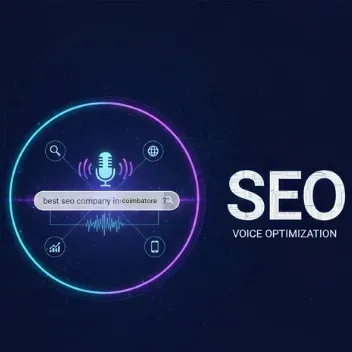




Key Takeaways
- •India's smart speaker adoption leads the world at roughly 20.9% market share, with weekly voice assistant usage around 33.6% nationally.
- •Voice queries run three to five times longer than typed searches and are overwhelmingly phrased as direct questions rather than keyword fragments.
- •76% of voice searches relate to "near me" or local intent, making voice search fundamentally a local-business opportunity, not just a novelty.
- •Over 40% of voice search answers are pulled directly from a featured snippet, meaning structured, snippet-friendly content has an outsized advantage.
- •Rural India shows around 78% regular voice search usage, higher than many businesses assume, especially those focused only on metro customers.
- •An estimated 32% of consumers now perform voice searches daily rather than occasionally, per current voice search market research.
Voice Search SEO: How to Get More Leads from Voice Queries in 2026
India's voice search usage has grown roughly three times faster than text-based search, with year-over-year growth around 34% across India, Brazil, and Indonesia according to current voice technology market tracking. Even more striking for a business owner in Coimbatore: rural India shows around 78% regular usage of voice search, often higher than urban assumptions would suggest, and smartphones alone account for about 56% of all voice queries.
The businesses that show up when someone asks their phone "who fixes AC near me" instead of typing "AC repair Coimbatore" aren't doing anything mysterious. They've simply structured their content around how people actually talk, not how people type. Voice queries are longer, more conversational, and phrased as full questions — and that changes what "optimized content" actually looks like.
Key Takeaways
- India's smart speaker adoption leads the world at roughly 20.9% market share, with weekly voice assistant usage around 33.6% nationally.
- Voice queries run three to five times longer than typed searches and are overwhelmingly phrased as direct questions rather than keyword fragments.
- 76% of voice searches relate to "near me" or local intent, making voice search fundamentally a local-business opportunity, not just a novelty.
- Over 40% of voice search answers are pulled directly from a featured snippet, meaning structured, snippet-friendly content has an outsized advantage.
- Rural India shows around 78% regular voice search usage, higher than many businesses assume, especially those focused only on metro customers.
- An estimated 32% of consumers now perform voice searches daily rather than occasionally, per current voice search market research.
What "Voice Search SEO" Actually Means
Voice search SEO is the practice of structuring content to match how people phrase spoken questions rather than typed keywords. Someone typing might search "Coimbatore wedding photographer prices." The same person asking their phone would more likely say "who's a good wedding photographer near me and what do they charge." Those are functionally the same intent, but they favor very different content structures — one rewards a keyword-stuffed heading, the other rewards a genuinely well-formed question-and-answer written in plain language.
In practical terms, this means writing content that directly answers specific questions in complete, conversational sentences, formatted in a way that search engines can lift cleanly into a featured snippet or a voice assistant's spoken answer, since over 40% of voice answers come from exactly that kind of snippet.
What It Looks Like When It's Working
Scenario: A Coimbatore appliance repair business had a website full of service pages titled things like "AC Repair Services" and "Washing Machine Repair" — accurate, but written the way a business describes itself, not the way a customer asks a question. Their organic traffic had plateaued, and nothing in their content matched the actual phrasing customers were using on voice assistants, even though that traffic segment was clearly growing based on their own analytics.
They restructured key pages around direct questions — "How much does AC repair cost in Coimbatore," "Who repairs washing machines near me the same day" — each answered in a clear, conversational paragraph near the top of the page, followed by supporting detail. Within four months, the business started appearing in featured snippets for several of these question phrases, and same-day service enquiries attributed to organic search rose by roughly 40%, with several customers specifically mentioning they'd asked their phone for a repair service and been read the business's own answer back to them.
How to Optimize for Voice Search and Capture More Leads
1. Write content as direct answers to full questions
Since voice queries are typically phrased as complete questions, structure key pages so an actual question ("How much does X cost in Coimbatore") appears as a heading, followed immediately by a clear, direct answer in the first sentence or two.
2. Prioritize "near me" and local-intent phrasing
With 76% of voice searches carrying local intent, every service page should explicitly mention your city and service area in natural language, not just in a footer or a hidden metadata field.
3. Target featured snippets deliberately
Because more than 40% of voice answers are read directly from featured snippets, format key answers as concise paragraphs (40-60 words) or short numbered lists immediately after a clear question heading — that structure is what search engines most often lift into a snippet.
4. Build a genuine FAQ section using real customer questions
Pull actual questions from WhatsApp enquiries, phone calls, and walk-in conversations rather than guessing — these are the exact phrasings customers use when they eventually ask a voice assistant the same thing.
5. Keep sentences conversational, not keyword-dense
Voice search rewards natural language that reads the way a person would actually speak, so awkward keyword-stuffed phrasing that might have worked for older text search tends to underperform for voice-driven queries.
6. Make sure your Google Business Profile answers match your website's answers
Voice assistants frequently pull local business information directly from Google Business Profiles, so pricing, hours, and service details need to be consistent across both, or you risk giving conflicting answers to the same spoken question.
7. Optimize for mobile page speed specifically
Since smartphones account for roughly 56% of all voice queries, a slow-loading mobile page undermines voice search performance even when the content itself is well structured, because search engines factor load speed into what they're willing to surface as a spoken answer.
Common Challenges and How to Overcome Them
"We don't know what questions our customers actually ask."
Start with your own phone and WhatsApp logs — the exact questions customers already ask your staff are the best possible source material, far more reliable than guessing at generic industry phrasing.
"Our content already ranks, why restructure it for voice?"
Ranking for typed keywords doesn't guarantee snippet-friendly answers for spoken questions — given that voice search is growing roughly three times faster than text search in India, content that only serves typed search is leaving a fast-growing channel untouched.
"We're a small business, does voice search even apply to us?"
It applies more, not less — with 76% of voice queries carrying local intent, voice search structurally favors local businesses over national chains, which is an advantage smaller Coimbatore businesses should be using rather than ignoring.
Where Coimbatore Businesses Have an Advantage
- Because voice search is so heavily weighted toward local intent, a genuinely local business with accurate local information has a structural edge over larger, more generic competitors.
- Real, specific local knowledge — area names, landmarks, actual service radius — is exactly the kind of detail that makes content answer local voice queries well, and it's something a local business writes naturally without extra effort.
- Lower content-marketing competition in many Coimbatore-specific service categories means well-structured voice-friendly content can start earning snippet placements faster than in saturated metro markets.
How Voice Search SEO Connects with Other Business Strategies
Voice search optimization overlaps almost entirely with strong local SEO fundamentals — an accurate, complete Google Business Profile, consistent local information, and genuine customer reviews all feed both channels at once, which is why the groundwork covered in taking your business online successfully directly strengthens voice search performance rather than requiring a separate, parallel effort.
Best Practices for Voice Search SEO
- Structure key pages around real customer questions, answered directly and conversationally.
- Keep your city and service area explicitly mentioned in natural page content.
- Format snippet-worthy answers as short, direct paragraphs right after a question heading.
- Keep Google Business Profile details consistent with your website's stated information.
- Prioritize mobile page speed, since most voice queries originate from smartphones.
FAQs
Is voice search SEO different from regular SEO?
It overlaps heavily but shifts emphasis toward conversational, question-based content and local intent, since voice queries are longer, more natural, and far more often locally focused than typed searches.
Do we need a separate website section for voice search?
No — the more effective approach is restructuring existing key pages to directly answer real customer questions, rather than building a separate, disconnected section just for voice queries.
How do we know if voice search is bringing us customers already?
Check which search queries in your analytics are phrased as full questions, and ask new customers directly how they found you — both are practical ways to estimate a channel that's otherwise hard to isolate precisely.
Does voice search SEO require any special technical setup?
Mostly not — it's primarily a content and structure exercise, though keeping your Google Business Profile accurate and your mobile site fast both meaningfully support voice search performance alongside the content changes.
Conclusion
Voice search isn't a separate discipline bolted onto SEO, it's a shift in how people phrase the exact same intent they've always had. The businesses capturing this fast-growing channel are simply the ones writing content the way their customers actually talk, and structuring it so a search engine can read that answer straight back to someone asking their phone a question.
If you want to know how your current content would actually perform against real voice queries in your industry, get in touch for a review and a practical plan to close the gap.
Share it with your colleagues and social network.